


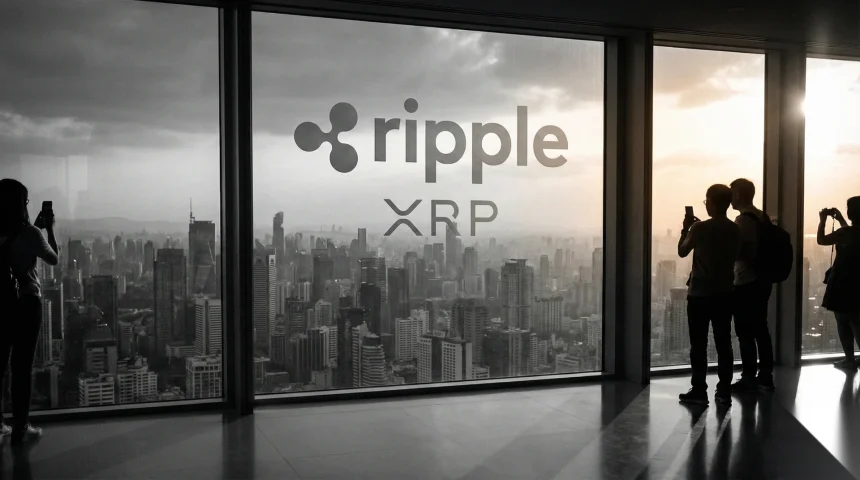
Ripple is setting the stage for its annual Swell 2026 conference, commencing on October 27 in New York City, by gathering representatives from financial giants BlackRock and the International Monetary Fund. This year, the spotlight will also shine on the Apex blockchain program, designed for developers.
Institutional Interest and Market Dynamics
Ahead of the conference, market observers are keenly watching whether the XRP Ledger’s infrastructure could establish a universal standard for institutional capital and how Wall Street’s involvement might influence pricing. Recently, a notable investment by Franklin Templeton clients, who acquired $3.55 million worth of XRP ETF shares, has accelerated regulated capital inflows into the ecosystem. This influx has enabled XRP to break away from months of stagnant trading, stabilizing in the $1.32 to $1.33 range.
Ripple aims to merge primary sessions with the Apex developer program at Swell 2026, seeking to integrate blockchain infrastructure with institutional finance.
The $1.40 mark is seen as a potential breakout point in the markets; however, the discussions extend beyond short-term expectations. They center around the expanding use cases for XRPL and its role in payment infrastructure.
Focus on BlackRock and IMF
While institutional players are not primarily focused on the token itself, they are exploring how liquidity solutions and AI-based applications are being integrated into Ripple’s infrastructure. This setup is being considered as a foundation for next-generation consensus and payment centers.
Since its inception in 2012, the multi-asset structure of XRPL has incorporated an automatic bridging mechanism, which could be utilized in payment flows managed by AI agents. In a volatile market where single actions by the Federal Reserve or sudden altcoin listings can cause rapid shifts, tools like CryptoAppsy are gaining popularity among traders for offering consolidated views of charts, smart price alerts, coin-specific news, and critical macroeconomic data.
RLUSD and Cross-Border Payment Strategies
Presentations in New York will likely cover scenarios on scaling Ripple’s stablecoin, RLUSD, within the On Demand Liquidity system for large-scale funds. On the retail front, a distribution plan by Binance aims to allocate 600,000 XRP to RLUSD holders by mid-November. Meanwhile, institutional discussions will focus on the long-term sustainability of these assets.
Ripple’s strategic partnership with Swiss-based fintech company Arf aims to offer settlement times of one to five days for RLUSD-based cross-border payments and anticipates introducing credit lines.
Through its collaboration with Arf, Ripple intends to showcase how its payment network could practically expand. The company aspires to accelerate cross-border transactions and lay the groundwork for broader financial services in the future.
The Swell 2026 event in New York, featuring participation from BlackRock and IMF representatives, serves as an opportunity for Ripple to demonstrate that its technology is ready for global real-use scenarios. From a market perspective, this development is expected to test the longstanding resistance level impacting XRP.