

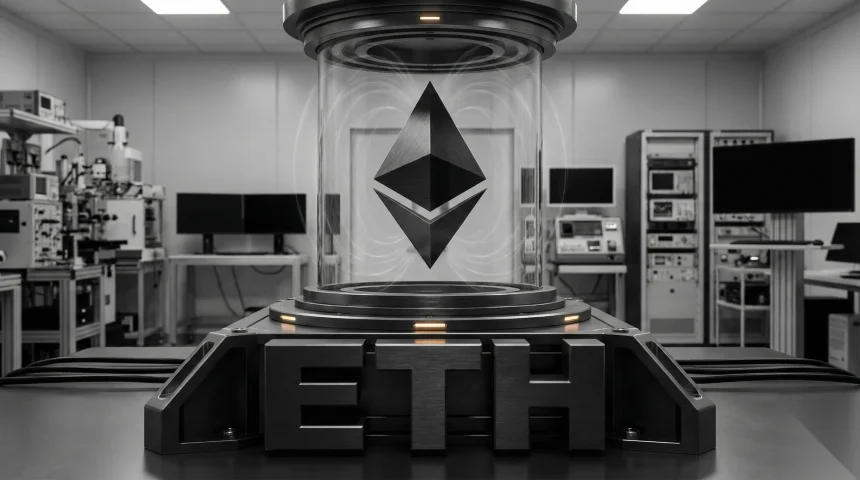
Ethereum’s core developers have announced a postponement of the Glamsterdam update implementation on the Hoodi test network. The decision stems from security concerns related to eight immutable smart contracts, which must be addressed before further testing can proceed.
Gas Calculation Issues Prompt Delay
The Ethereum Foundation revealed that some existing projects operate under the assumption that certain transactions carry a fixed gas cost. The new measures included in Glamsterdam, particularly EIP 8037 and EIP 8038, alter the way gas fees are calculated for some transactions. Consequently, smart contracts built on legacy assumptions could face unintended disruptions.
A report from ChainSecurity, dated October 13, highlighted risks associated with smart contracts reliant on fixed gas assumptions, particularly in scenarios where external calls fail. ChainSecurity is renowned for its expertise in providing security audits for blockchain projects.
Ethereum Foundation indicated that the fork on the Hoodi test network will not proceed until the issues are resolved, affording developers additional time to identify potential contract risks.
Critical Testing Phase Delayed
The postponement of the Hoodi test offers developers valuable time to examine potential incompatibilities more meticulously. This preparatory measure ensures that necessary adjustments can be clarified before Glamsterdam approaches deployment on the main network. According to the Ethereum Foundation, the Hoodi fork will remain on hold until the concerns are adequately addressed.
On October 6, the Glamsterdam update was deployed on the Sepolia test network, classified as one of the final major trial phases before launching on the mainnet. This update is part of Ethereum’s roadmap to enhance its first-layer scalability.
Extensive Update Inclusions
The update package includes the proposer-builder separation feature, block-level access lists, and a new gas pricing scheme aimed at more accurately reflecting execution costs. While these elements aim to boost network efficiency, the integration schedule is cautiously paced to accommodate existing contract compatibility issues.
The ChainSecurity audit warns that EIP 8037 and EIP 8038 may disrupt contracts reliant on fixed gas assumptions, especially in failed external call scenarios.
This recent decision underscores the critical role of testing in the Ethereum ecosystem, not only for activating new features but also for safeguarding the integrity of legacy applications. While testing continues on the Sepolia network, no timeline has been announced for resuming the Hoodi phase.