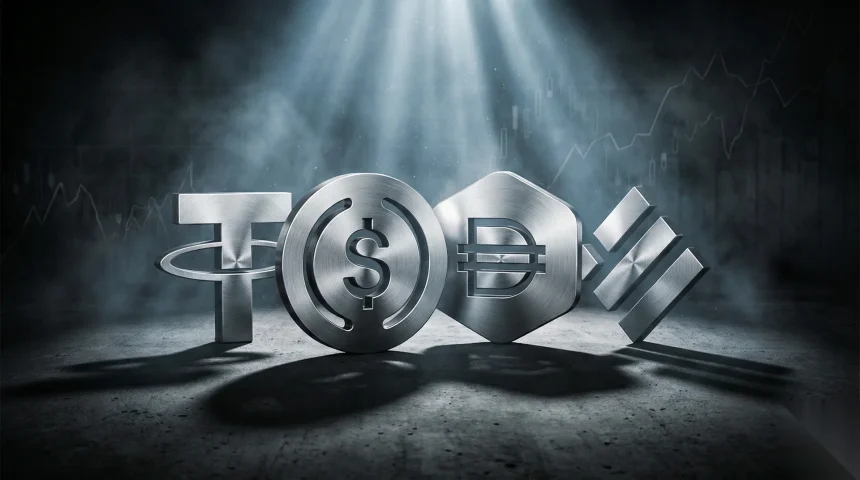
Paxos, renowned for its blockchain-based financial infrastructure, has successfully launched its stablecoin, Global Dollar (USDG), on the Arbitrum network. This move integrates Arbitrum into the Global Dollar Network, enabling the use of USDG within various decentralized finance (DeFi) applications on Arbitrum One. The deployment marks a significant step in expanding the reach and functionality of the stablecoin across diverse financial platforms.
DAO Proposal Envisions Strategic Growth
Key decentralized finance protocols, including Fluid, Morpho, GMX, and Maple, have integrated USDG, broadening its usability within the DeFi ecosystem. Kraken has extended its support, facilitating deposits and withdrawals for USDG, while Stargate offers cross-chain transfer capabilities between Arbitrum and other blockchain networks. A pivotal proposal presented to ArbitrumDAO aims to prioritize USDG’s growth as a strategic objective. This includes a substantial incentive plan proposing the addition of 100 million ARB tokens to encourage adoption, alongside utilizing Arbitrum’s treasury assets to bolster USDG liquidity.
Arbitrum is set to gain revenue share from USDG operations, redirecting these funds into adoption initiatives and ecosystem growth.
Stablecoin Dynamics on Arbitrum
Arbitrum Foundation data estimates approximately $4 billion worth of stablecoins currently circulating on the network. According to DeFiLlama data, USDG ranks as the seventh-largest stablecoin by market capitalization, with around $3.09 billion in circulation. The majority of USDG’s distribution is concentrated on networks like X Layer, Robinhood Chain, and Solana, reflecting its broad market penetration.
Paxos’s venture into Arbitrum signifies not just an enhancement of crypto-native applications but also establishes a crucial infrastructure role for bridging traditional assets within blockchain ecosystems. This aligns with the evolving landscape where conventional financial offerings transition to blockchain frameworks.
Impact of Robinhood Chain
The transformative influence of this expansion is notably exemplified by Robinhood Chain. After launching a public testnet in February and a mainnet in July, Robinhood Chain, built on Ethereum’s layer 2 Arbitrum infrastructure, is tailored for both tokenized real-world assets and digital financial instruments. The platform operates around the clock, offering comprehensive market functionalities such as lending and perpetual futures trading.
Standard Chartered views Robinhood Chain’s role as pivotal in reshaping the Arbitrum economy, with 10% of the net protocol revenue generated by application developers being reinvested into the network.
Long-term Outlook for ARB
In a recent report, Standard Chartered projected the convergence of this revenue model with growth in asset tokenization as a potential long-term support for the ARB token. The bank speculated on a remarkable ARB price surge to $10 by 2030, a stark contrast to its current valuation. Furthermore, the bank anticipates the cumulative size of tokenized assets could soar to $4 trillion by the end of 2028, positioning Arbitrum as a beneficiary amid this digital transformation.
Continued asset migration to blockchain infrastructures offers Arbitrum a strategic advantage as a leading network poised to capitalize on this burgeoning digital asset frontier.